
The Art of Communication

Posted by on 9 May, 2013

Mishal Pakistan launches the Credibility Lab, an initiative to create new frameworks and methodologies to measure current trends and indices on Media Ethics, Journalism Standards, Media Credibility and Rankings to be measured on international benchmarks.

Read More

Posted by on 12 Apr, 2013

Publication: PROPAKISTANI Date; April 11, 2013 Web Address:- http://propakistani.pk/2013/04/11/pakistan-falls-in-global-ict-ranking/ Despite efforts in the past decade to improve...

Read More
PreCall – 4th intl. conference on M4D – Dakar, Senegal – 8-9 April 2014

Posted by on 19 Mar, 2013

This conference is the fourth in the M4D biennial series following the inaugural conference in Karlstad, Sweden in 2008. The 2nd conference was in Kampala, Uganda in 2010 and the...

Read More
Pakistan Needs to Improve its framework on Intellectual Property Protection

Posted by on 26 Apr, 2013

Pakistan Needs to Improve its framework on Intellectual Property Protection   On the World Intellectual Property Rights Day 2013, MishalPakistan, a country partner institute...

Read More

Recent Posts

Mishal Pakistan Launches “Credibility Lab” for Research on Media and Competitiveness


Mishal Pakistan Launches “Credibility Lab” for Research on Media and Competitiveness

Credibility Lab to adopt the Triple Helix model to develop and launch the Media Credibility Index for Ethical Journalism in Pakistan

Mishal Pakistan launches the Credibility Lab, an initiative to create new frameworks and methodologies to measure current trends and indices on Media Ethics, Journalism Standards, Media Credibility and Rankings to be measured on international benchmarks.

Media Credibility Index

The Six Pillars of Media Credibility Index

The Credibility Lab among other areas will be working on models to improve more creative interactions between the Triple Helix players.

The Credibility Lab will also be working to explore the potential for innovation and economic development in a Knowledge-based Society, which lies in a more prominent role for the university and the hybridisation of elements from University, industry and Government to generate new institutional and social formats for the production, transfer and application of knowledge.

Mishal Pakistan’s Credibility Lab will work as a knowledge sharing and a network for experts from the industry, academia and policy makers. The Credibility lab will be working with more than 10 research-academic institutions, specializing in journalism studies and media sciences across Pakistan, a similar number of international universities and media development institutions will be partnering with Mishal Pakistan on this initiative.

The Credibility Lab at Mishal will be undertaking new initiatives in this year i.e. the Media Credibility Index (MCI), an initiative started in January 2013 in collaboration with leading research institutions across Pakistan and international journalism and media academics and practitioners. The Media Credibility Index focuses on the relative credibility and believability of various media channels through which content is created.

First time in Pakistan a media credibility index will be developed after an extensive examination of media laws, ethics, rules and regulations drafted by different media groups, regulatory bodies and journalistic organizations both at national as well as international arena. The MCI will explore the state of media in Pakistan against six media credibility indicators and 20 sub-indices.

Mishal has incorporated more than thirty code of conducts, ethical code and journalism principles, which include currently prevalent seven national code of conducts and twenty four international code of ethics from international regulatory bodies, country code of conducts and agreed journalistic codes of ethics across the globe.

Codes of Ethics framed by Pakistani media groups have also being included such as Jang group’s Geo Asool, Dunya’s code of ethics, Express group’s journalism code of conduct and Dawn Group’s principles and code of conduct.

After reviewing the principles of journalism and codes of ethics for journalists; six media credibility indicators with 20 sub-indices have been developed in order to measure the media discourse and credibility of current affair content in Pakistan. This extensive study entails thirty-five current affair programs of the mainstream Pakistani news channels.

The Credibility Lab, through its activities will further strengthen the Triple Helix concept, which relies on three main ideas: (1) a more prominent role for the University in creating new though and research processes, on a par with Industry and Government in the Knowledge Society; (2) a movement toward collaborative relationships among the three major institutional spheres, in which information and knowledge policy is increasingly an outcome of interaction rather than a prescription from Government; (3) in addition to fulfilling their traditional functions, each institutional sphere also “takes the role  of the other” performing new roles as well as their traditional function.

The Credibility Lab will be publishing its research in collaboration with its partners on periodic basis on the state of media and competitiveness in Pakistan.

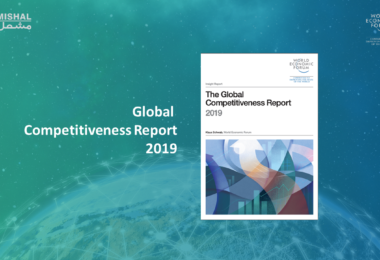
Mishal Pakistan is the partner institute of the Global Competitiveness and Benchmarking Networks, World Economic Forum. Mishal assists the forum in creating the soft-data on Pakistan, identifying Pakistan’s competitiveness challenges. Mishal has also launched Pakistan’s first journalism awards on the framework designed jointly with the Center for International Media Ethics and UNESCO’s Media Development Indicators.

Pakistan Needs to Improve its framework on Intellectual Property Protection


Pakistan Needs to Improve its framework on Intellectual Property Protection


On the World Intellectual Property Rights Day 2013, MishalPakistan, a country partner institute of the Global Competitiveness and Benchmarking Network of the World Economic Forum shared the State of IPR in Pakistan.

Media Unite in Pakistan to Promote Ethical Coverage of Election 2013


Media Guidelines for Elections 2013 in Pakistan in the picture (R-L):  Arif Nizami, Federal Minister for Information and Broadcasting,  Aidan White, Director of the Ethical Journalism and European Union,  Election Observer Mission’s media analyst Inta Lase

Media Guidelines for Elections 2013 in Pakistan in the picture (R-L):
Arif Nizami, Federal Minister for Information and Broadcasting,
Aidan White, Director of the Ethical Journalism and European Union,
Election Observer Mission’s media analyst Inta Lase

As the Election Commission of Pakistan announced the final list of the candidates for the May 11 vote, broadcasters, publishers and editorial executives across all platforms of media highlighted an unprecedented agreement on media guidelines that aims to ensure fair reporting of the election and to avoid all forms of hate speech and incitement to violence.

Pakistan’s Global Ranking in ICT Drops


ProPakistani1

Publication: PROPAKISTANI
Date; April 11, 2013
Web Address:- http://propakistani.pk/2013/04/11/pakistan-falls-in-global-ict-ranking/

WEF’s Global Information Technology Report 2013; Pakistan’s ICT ranking downgraded to 105th


DT

Publication: Daily Times
Date; Thursday, April 11, 2013
Web Address:- http://www.dailytimes.com.pk/default.asp?page=2013%5C04%5C11%5Cstory_11-4-2013_pg5_9

Pakistan Ranks at 105 on WEF’s Technology Report


news2Publication: The News International
Date; Thursday, April 11, 2013
Web Address:- http://www.thenews.com.pk/Todays-News-3-170565-Pakistan-ranks-at-105-on-WEF%20s-technology-report

News Desk

Thursday, April 11, 2013
From Print Edition

Pakistan’s Global Ranking in ICT Drops


dawn

Pakistan’s Global Ranking in ICT Drops

Publication: DAWN
Date; April 11, 2013
Web Address:- http://dawn.com/2013/04/11/pakistans-global-ranking-in-ict-drops/

The Role of ICT for Sustained Economic Growth and Job Creation is Crucial to Improve Pakistan’s Competitiveness


wef-report-2013

click to download complete report

Pakistan lost 3 ranks on the World Economic Forum’s Network Readiness Index (NRI), securing 105th position among 144 countries on the Global Information Technology Report 2013.

Despite efforts in the past decade to improve information and communications technologies (ICT) infrastructure in developing economies, there remains a new digital divide in how countries harness ICT to deliver competitiveness and well-being, according to the 12th edition of The Global Information Technology Report, released today by the World Economic Forum.